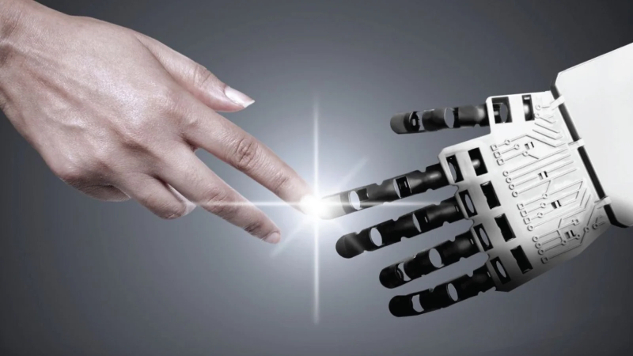
We didn't wake up one day and hand the reins to machines. It happened quietly, one convenience at a time. Your email sorted itself. Your calendar learned to suggest meeting times. Your bank had already flagged the fraud before you noticed the charge. These felt like helpful upgrades, not power transfers. But something shifted along the way, and most of us missed it.
In This Article
- Understanding what AI agents actually are and how they differ from regular software
- The critical difference between assistance and delegation in automated systems
- Why optimization without wisdom creates predictable problems
- Real-world examples of both ethical use and emerging abuses
- Practical steps to maintain your agency in an automated world
The systems that now sort, suggest, and sometimes decide for us started as simple helpers. Spam filters saved us from endless junk. Recommendation engines pointed us toward books we might enjoy. Scheduling assistants found times that worked for everyone. Each innovation solved a real problem. Each made life marginally easier. And each trained us to expect that technology would handle increasingly complex judgments on our behalf.
We're now at a point where the systems don't just help us decide—they decide and act. They don't wait for approval. They don't always explain themselves. And they operate at scales and speeds that make human oversight feel quaint, even impossible. This didn't happen because we made one big choice to surrender control. It happened because we made ten thousand small choices to accept convenience without questioning the cost.
What These Systems Actually Do
An AI agent is different from the software you grew up with. Traditional programs follow instructions. They wait for input, process it according to fixed rules, and stop. A calculator doesn't keep calculating after you walk away. A word processor doesn't start writing on its own. These tools are inert until activated. They're servants, not actors.
AI agents operate differently. They observe their environment continuously. They make decisions based on what they perceive. They take actions to achieve goals. And they repeat this cycle without constant human direction. The defining trait isn't intelligence in the human sense—it's initiative. An agent doesn't just respond when called. It operates.

Think of a thermostat. The old kind required you to adjust it manually when the temperature changed. A smart thermostat observes patterns, learns your preferences, predicts your schedule, and adjusts heating and cooling on its own. It's making decisions. Small ones, but decisions nonetheless. Now scale that up to systems that trade stocks, filter job applications, moderate content, and manage supply chains. The principle is the same. The consequences are not.
The Difference Between Helping and Replacing
There's a moral hinge point in automation that most discussions skip past. It's the difference between using AI to inform your judgment and letting AI replace your judgment. One keeps you responsible. The other lets you off the hook.
When a doctor uses an AI system to analyze medical images but still reviews the results and makes the diagnosis, that's augmentation. The tool surfaces patterns the human might miss. The human integrates those findings with patient history, symptoms, and clinical experience. Responsibility remains clear. But when an insurance company uses an algorithm to approve or deny claims, and the human reviewers become rubber stamps who rarely overturn the system's recommendations, something important has changed. The appearance of human oversight masks what is effectively algorithmic authority.
Delegation feels efficient. It feels neutral. It feels like progress. After all, why should humans spend time on decisions that machines can handle faster and more consistently? The answer is that consistency is not the same as correctness, and efficiency is not the same as justice. Machines don't have skin in the game. They don't lose sleep over mistakes. When we delegate judgment to systems that lack judgment, we create an accountability vacuum. And that vacuum gets filled with excuses. The algorithm did it. The system flagged it. These phrases have become shields against responsibility.
Why Relentless Optimization Fails Us
AI agents are optimizers. They're given goals and they pursue those goals relentlessly, often far more effectively than humans could. That sounds like an advantage until you look at what actually gets optimized. Social media algorithms optimize for engagement, which in practice means amplifying outrage and controversy because those keep people scrolling. Hiring algorithms optimize for patterns in past successful hires, which means they replicate historical biases. Pricing algorithms optimize for revenue, which can mean different people pay different prices for the same product based on how much the system thinks they'll tolerate.
The problem isn't that these systems are broken. It's that they're working exactly as designed. They're doing what they were told to do. But the goals they were given are incomplete. They don't account for truth, fairness, dignity, or long-term well-being because those things are hard to measure and even harder to encode. So systems maximize what can be measured—clicks, conversions, efficiency, profit—and the things that matter most get treated as externalities.
Humans are supposed to be the ones who weigh context and values. We're supposed to notice when optimization creates harm. But when systems operate at scale and speed, that human judgment becomes impractical. By the time we notice something's wrong, the algorithm has already made ten thousand decisions. What can be optimized is not always what should be maximized. That's a truth machines cannot grasp and humans keep forgetting.
How These Systems Are Being Misused
Most harm from AI agents doesn't come from malice. It comes from unchecked systems doing exactly what they were programmed to do, at scales and speeds that magnify every flaw. One human acting unethically is a problem. One system allowing a single actor to operate as if they were thousands is a crisis.
Scale without accountability shows up everywhere. Bots that manipulate social media conversations, fake review systems, automated spam that adapts faster than filters can catch it. When consequences arrive, the defense is always the same: the system did it. I just set the parameters. These excuses work because accountability has been deliberately obscured.
Delegated harm is particularly insidious because it lets institutions avoid responsibility while still wielding power. An algorithm denies your loan application. An automated system flags your post as violating community standards. A hiring tool screens you out before a human ever sees your resume. When you appeal, you're often told the decision stands because the system is fair and objective. But fairness is not the same as consistency, and objectivity is a myth when the system was trained on biased data or designed to optimize the wrong goals.
The Deepest Risk
The real danger isn't that machines will take control. It's that we'll stop trying to. People adapt to the systems around them. When decisions feel automated and inevitable, questioning fades. When outcomes arrive without visible human involvement, responsibility seems to evaporate. We're training ourselves to accept what we're given instead of demanding what's right.
This pattern is familiar. Bureaucracy teaches people that rules are fixed and exceptions don't exist. Platform monopolies teach people that terms of service are non-negotiable. Financial automation teaches people that markets are beyond human influence. Each system chips away at the sense that individual choice matters. And AI agents, because they operate faster and more opaquely than anything before them, accelerate this process.
Agency is not a default state. It's something you practice or lose. The more often you defer to systems, the less capable you become of asserting your own judgment. The more often you accept algorithmic outcomes without question, the harder it becomes to imagine things could be otherwise. That's the greatest danger. Not control by machines, but habituation to not deciding.
What You Can Actually Do
Resisting the erosion of agency doesn't require grand gestures. It requires everyday practice. Start by questioning invisible automation. When a system makes a decision that affects you, ask how it works and who's responsible. Before trusting automated outcomes, ask whether the result makes sense and whether the system might be missing something important. Favor systems that explain themselves over black boxes that demand trust.
Stay involved where it matters. Don't delegate decisions just because you can. If a tool offers to write your emails, edit your work, or make recommendations on your behalf, consider whether the convenience is worth the distance it creates between you and the task. And when you encounter systems that operate without accountability, demand better. Push back on algorithmic decisions. Ask for human review. Refuse to accept that the system's answer is final just because it's automated.
Agency is a practice, not a default setting. Every time you question an automated outcome, you're exercising a capacity that atrophies from disuse. Every time you insist on human accountability, you're pushing back against the normalization of algorithmic authority. These small acts of conscious choice matter because they shape the environment everyone else navigates.
Tools We Shape or Forces That Shape Us
AI agents are tools we design. That's the first truth. But once deployed, they reshape behavior and power. That's the second truth. Both are real, and pretending otherwise is dangerous. The question is not whether these systems will continue to act. They will. The question is whether humans will remain accountable for what acts in their name.
The future is being built right now through a million small decisions about where to automate and where to insist on human judgment. Those decisions are not just technical. They're moral. They're about what kind of world we're willing to live in and what kind of agency we're willing to preserve. The default path is clear. More automation, less oversight, greater convenience, diminished responsibility. That path is easy because it's profitable and efficient and seems inevitable.
But inevitability is a story we tell ourselves to avoid the discomfort of choosing. The reality is that every deployment of an AI agent is a choice. Every acceptance of algorithmic authority is a choice. Every time we shrug and say the system decided is a choice. And every choice shapes what comes next. So the question is not what AI will do. The question is what decisions you're still willing to make yourself. The answer to that question matters more than any algorithm.
About the Author
Alex Jordan is a staff writer for InnerSelf.com
Recommended Books
The Alignment Problem: Machine Learning and Human Values
A deeply researched exploration of how AI systems learn values and why aligning them with human flourishing is far more complex than most people realize.
Weapons of Math Destruction: How Big Data Increases Inequality and Threatens Democracy
An accessible examination of how algorithms entrench inequality and operate without accountability, written by a mathematician who worked inside the systems she critiques.
Automating Inequality: How High-Tech Tools Profile, Police, and Punish the Poor
A powerful investigation into how automated systems target and punish the poor, revealing the human cost of algorithmic decision-making in public services.
Article Recap
AI agents represent a shift from tools that assist human judgment to systems that replace it, operating with initiative and autonomy at speeds that make oversight difficult. The real risk is not machine intelligence but the gradual erosion of human agency as we adapt to automated decision-making without accountability. Ethical use requires keeping humans responsible for consequential decisions, maintaining transparency, and recognizing that optimization without wisdom creates predictable harm.
#AIagents #automation #humanagency #algorithmicaccountability #ethicalAI #digitalautonomy #techandethics