

Can You Really Change the World Starting With One Choice?
The world feels broken, but what if the solution isn’t out there—it’s within you? Every thought, every reaction, every choice shapes…

 An ever-changing climate can put certain regions in the crosshairs of coastal flooding, heavy rain, erosion, and other risks.
 African nations have overwhelmingly included climate resilient agriculture in their indicative pledges to the United Nations. And agriculture is seen as a major focus through a common position of the African Union on climate adaptation.
 Educating rural communities can help them prevent permanent damage to the environment. There is a common misconception that you can’t talk about climate change in rural communities because the issue is considered too polarizing...
 People depend on grass crops for food, but new research raises concerns that if climate changes too fast, grasses won’t adapt fast enough to keep pace.
 With every passing year, Southeast Florida faces more pressure to adapt to climate change. The region already experiences the effects of climate change, such as flooding on sunny days during the highest tides of the year
 If you flip over a log in a forest in the southeastern U.S., you are likely to find a squirming salamander.
 Water crises seem to be everywhere. In Flint, the water might kill us. In Syria, the worst drought in hundreds of years is exacerbating civil war. But plenty of dried-out places aren’t in conflict. For all the hoopla, even California hasn’t run out of water.
 In a context of unprecedented climate change and food insecurity, adaptation in agricultural systems is critical in Africa. It is crucial to breed new varieties of staple crops that are adapted to deal with climatic conditions.
 In recent years wildfire seasons in the western United States have become so intense that many of us who make our home in dry, fire-prone areas are grappling with how to live with fire.
 The plan for Louisville includes tree-planting targets and cool roofing and paving goals for different neighborhoods. In all, an additional 450,000 trees are recommended.
 Many regions of the United States are struggling with water shortages. Large areas of the West are contending with moderate to severe drought, while California is now in the fifth year of one of the most extreme droughts in its history. Even non-arid regions, such as the Southeast, are not exempt from water shortages.
 California has experienced, over the past few years, its most severe drought on record. In response to worsening conditions, Governor Jerry Brown announced the first ever statewide mandatory reduction in urban water use in April 2015. This calls on Californians
 It was Charles Darwin, almost 200 years ago, who first asked how it could be that coral reefs could flourish in relatively barren parts of the Pacific Ocean. This conundrum subsequently became known as Darwin’s Paradox.
 It’s mid-February and along Britain’s south coast gilt-head bream are drifting from the open sea into the estuaries. Meanwhile, thousands of little egrets are preparing to fly to continental Europe for breeding season, though a few hundred
 We don’t have to know exactly how high the sea might rise to start doing something about it.Climate scientists have recently been outraged by job losses within CSIRO. Sixty climate jobs are likely to be lost.

Climate change is going to affect every city on the planet in some way—but not necessarily in the same way. For those cities already adapting to it, strong, decisive action may spell the difference between surviving global warming and succumbing to it. Five cities that are steeling themselves…and five that are fooling themselves.

In tropical developing countries, effective coastal management must acknowledge the widespread dependence of poor and politically weak communities on the use of fish for food. Acknowledging this dependence on artisanal fisheries is pivotal to reconciling the largely separate agendas for food security and biodiversity conservation.

I believe we have a problem — a big problem. According to demographers, by the end of this century we’ll have around 11 billion mouths to feed. Most of the additional 4 billion people alive then will be in developing nations.
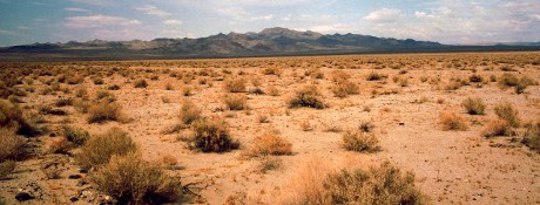
Alan Savory's Holistic Management offers a transformative method to combat desertification, revitalizing arid grasslands into thriving ecosystems. This approach not only restores environmental health but also tackles issues such as poverty and climate change, showcasing its potential as a global solution for degraded landscapes.